Organizational Effectiveness
Making the organization work better.
Growth, transformation and changing business demands can expose limitations in an organization's structure, leadership capabilities and operating model.
Responsibilities become unclear. Decisions take longer than they should. Leaders find themselves resolving problems the organization thought it was equipped to handle.
Sometimes the structure no longer fits the business. Sometimes it does, but the leadership team, capabilities or ways of working need to change.
Where Inception helps
Organizational and operating model design
Is the organization structured to execute its strategy? Inception examines roles, accountabilities, ownership of critical decisions and how responsibilities are distributed across functions.
Executive team effectiveness and development
Helping executive teams address issues that limit their collective performance.
This includes leadership alignment, accountability, working relationships and the rhythm leaders need to operate effectively together.
Transformation and capability development
Helping organizations identify the leadership, organizational and operating changes their plans demand.
The work considers whether existing capabilities, responsibilities and talent deployment are sufficient to support the intended transformation.
Agency and professional-services effectiveness
Agencies face particular challenges as they develop capabilities, respond to changing client demands, and attract and retain great talent.
Inception brings direct operating experience to questions about leadership structures, client assignments, capability integration and talent development and deployment.
How the work takes shape
The work starts with the organization's circumstances and the decisions its leaders need to make.
Depending on the challenge, Inception may examine the operating model, work with executive leaders on decision-making or recommend changes to organizational design.
When challenges overlap and the underlying issues are unclear, the Performance Diagnostic can help establish priorities.
Where the need is already clear, advisory or team development work can begin directly.
An organization better equipped to execute its strategy, with clearer accountabilities, stronger leadership alignment and fewer obstacles created by the way it operates.
Leadership Insight
Better evidence for decisions about people.
Leadership decisions rarely come with complete information.
A capable executive may be struggling in a new role. An executive team may have difficulty working together despite the strength of its individual members. Organizations need to judge leadership readiness, make succession decisions and determine where development efforts will matter most.
Experience and judgment matter. Assessment-based insight adds another perspective.
Where Inception helps
Inception uses leadership assessment and individualized analysis to examine how leaders process information, make decisions, communicate and respond under pressure.
These insights inform:
• Executive onboarding and transitions: Examining how a leader's patterns may affect their effectiveness in a new role.
• Leadership readiness and succession: Adding evidence to discussions about capability, development needs and future responsibilities.
• Team effectiveness: Understanding differences in how leaders approach decisions, relationships and demanding situations.
• Performance management and development: Identifying strengths, limitations and opportunities for focused development.
How the work takes shape
Inception's leadership assessment work draws on the Attentional and Interpersonal Style inventory (TAIS).
Its findings inform leadership development, coaching and organizational decisions about leadership capability.
For individual leaders, Inception also offers TAIS & the Leader's Operating System as a standalone engagement.
It combines assessment, individualized analysis, a personal debrief and a written report that translates findings into guidance the leader can use.
Better-informed decisions about leadership readiness, development and effectiveness, grounded in how leaders operate.
The objective is to strengthen the evidence behind important people decisions, not replace the judgment required to make them.
Executive Performance
Executive coaching for the demands of leadership.
Not all the pressure of senior leadership is visible.
Responsibilities expand. Relationships become more complicated. Decisions carry greater consequences. Organizational change continues while the leader is expected to remain effective throughout it.
Experience does not remove these demands. Success in one role does not guarantee effectiveness in the next.
Where Inception helps
Executive coaching provides a confidential setting for leaders to examine the challenges they face and develop their capacity to respond.
Common areas of focus include:
• Leadership transitions: Adapting judgment, influence and behaviours to expanded responsibilities.
• Communication and relationships: Strengthening executive presence, difficult conversations and effectiveness with peers and stakeholders.
• Leadership through others: Developing the ability to delegate, influence, build accountability and lead beyond direct personal contribution.
• Performance under pressure: Understanding how stress, competing demands and personal patterns affect judgment, resilience and effectiveness.
How the work takes shape
Coaching brings reflective inquiry and focused development to the challenges a leader is facing now.
Assessment helps leaders recognize patterns in their strengths, limitations and responses under pressure.
The Leader's Operating System translates those insights into a reference for continued development, available within executive coaching or as a standalone engagement.
Greater confidence and effectiveness in exercising judgment, leading through others and meeting the demands of changing responsibilities.
Performance Diagnostic
Clarity on what is constraining performance.
Judgment about what to do next.
An organization can know performance is falling short without knowing why. Existing capabilities may be underused. Leaders may also be uncertain about what needs to change to meet their ambitions.
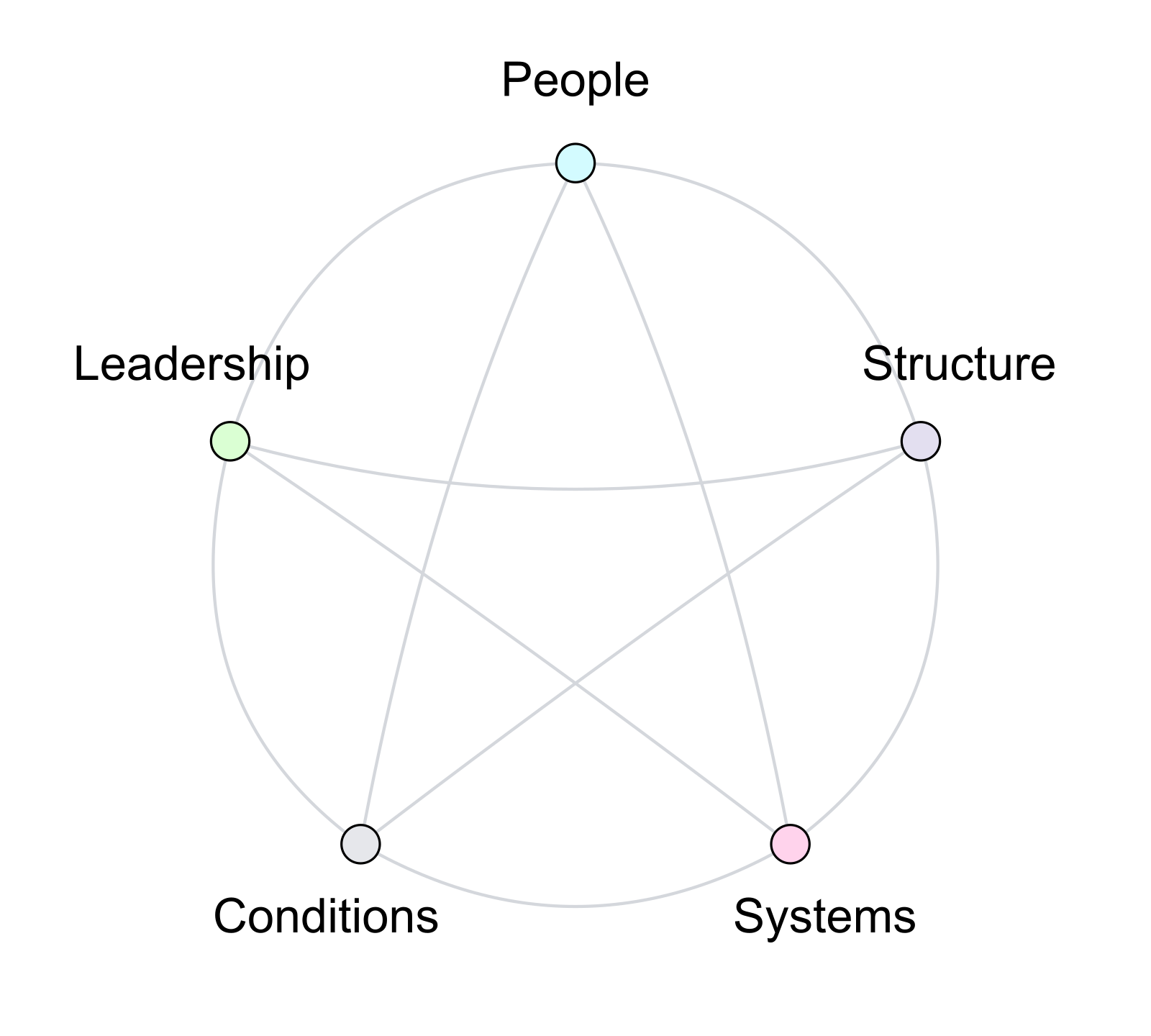
The Performance Diagnostic helps leaders examine competing explanations and identify what matters most to performance.
When it is useful
The diagnostic is useful when organizational challenges are connected, earlier interventions have not addressed the underlying problem, or several possible investments or changes compete for attention.
It can also help leadership teams preparing for growth, integration or transformation understand where current conditions may limit their plans.
What the work involves
The work draws on relevant organizational information, leadership perspectives and operating evidence. It examines how issues are connected, distinguishes symptoms from likely causes and identifies where action should be prioritized.
What clients receive
A concise written decision brief and working discussion that establish:
• The principal findings and constraints.
• The evidence supporting those findings, including important uncertainties.
• The relative priorities and relationships among the issues identified.
• Practical options for corrective action or performance enhancement.
TAIS & the Leader's Operating System
Understanding how leaders perform. Translating insight into action.
The Attentional and Interpersonal Style inventory (TAIS) is an advanced performance assessment used with high-performing individuals in business, the military and professional sports.
TAIS helps identify how a leader focuses attention, processes complexity, communicates, makes decisions and responds under pressure.
The Leader's Operating System
Inception translates TAIS findings into individualized guidance through detailed analysis, a personal debrief and a written Leader's Operating System.
The report examines how a leader's strengths interact, how they make decisions and relate to others, and what changes under pressure.
It also identifies the conditions that support effective performance and where strengths can become limitations.
The result is a reference the leader can return to as responsibilities and circumstances change, with specific adjustments to consider along the way.
The TAIS assessment, analysis, debrief and written Leader's Operating System are available as a standalone engagement or within executive coaching.